
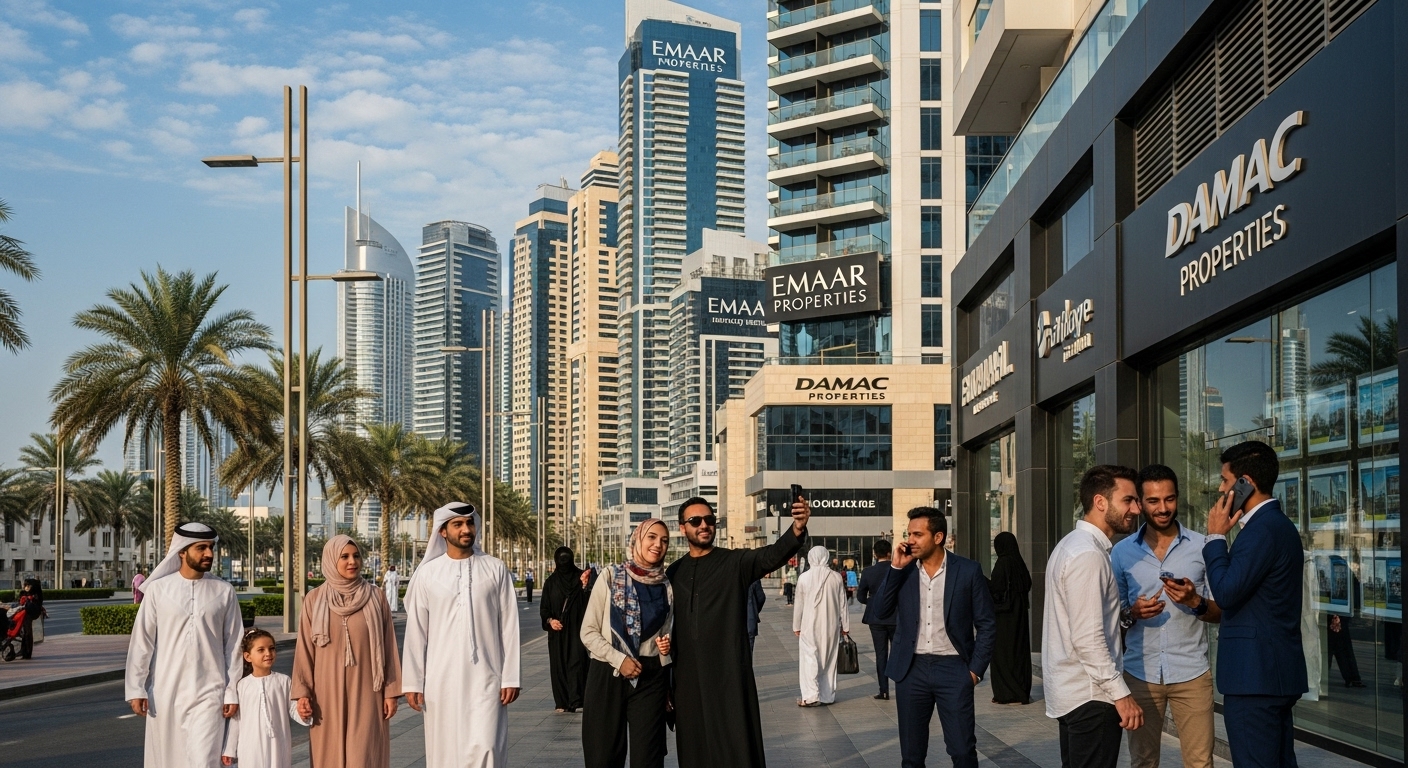

As we settle into 2026, the real estate market in the United Arab Emirates is unmistakably at a crossroads — no longer just riding the wave of post-pandemic recovery, but shifting into a more mature, balanced, and strategically diversified phase. After years of explosive growth, the narrative has evolved: supply dynamics, demand maturity, investor segmentation, and new policy levers are all converging to shape the market’s next chapter.
Here’s my comprehensive take on where we’ve come from, what’s happening now, and where the UAE real estate sector is headed.
Growth Drivers Since 2025
1. Population Expansion and End-User Demand
Dubai’s population growth — driven by economic diversification, foreign investment, and progressive residency schemes — remains a foundational demand engine. For example, data from late 2025 showed Dubai’s population surpassed 4 million, with an annual growth rate of around 4–6%, which directly supports long-term residential demand.
This isn’t just about numbers — it’s about changing buyer profiles: an increasing share of purchasers are end-users seeking homes, not purely investors chasing returns. That shift toward genuine occupancy demand layers more stability into the market.
2. Strategic Policies & Incentives
Government initiatives continued to play a pivotal role through 2025 and into 2026. For instance, a Dubai government initiative converted 2,000 long-term renters into first-time homeowners within six months, generating AED 3.25 billion (about $885 million) in sales and underlining the strength of targeted housing schemes.
Coupled with ongoing incentives like Golden Visas for property investors, full foreign ownership rights, and tax-free investment schemas, the regulatory environment still fuels capital inflows and wealth migration — especially from Europe, Asia, and North America.
Price Trends: From Boom to Maturity
1. Strong Past Growth — Now Moderating
To understand 2026, it helps to look back at 2024–2025: Dubai’s property prices saw significant appreciation — 16.5–21% year-on-year — with luxury villas outpacing many other asset classes. Yet by late 2025 and into 2026, the pace of increases has slowed. Analysts forecast mid-single-digit price growth — roughly 5–8% — for 2026, a clear moderation from the heady double-digit gains seen earlier.
The reason isn’t weak demand — it’s more supply entering the market. Dubai alone is set to hand over roughly 120,000 new residential units in 2026, and that influx naturally tempers the previous supply shortage that had driven rapid price increases.
2. Segment Differentiation
Even with moderation, some areas remain outperformers:
- Prime and luxury locations — such as Palm Jumeirah, Emirates Hills, and Dubai Hills Estate — continue to see robust demand and higher growth forecasts (6–10% or more).
- Mid-market and affordable segments are expected to grow at a steadier but solid clip as new stock complements evolving buyer preference patterns.
In Abu Dhabi, parallel dynamics are at play: limited inventory and strong end-user demand have helped sustain price growth, with prices and rents growing at solid mid-to-high single digits, particularly in neighborhoods prized for lifestyle and proximity to employment hubs.
Market Shifts: Supply, Segmentation, and Smart Demand
1. Supply Surge and Market Balance
After several years of constrained development, 2025 and 2026 mark a meaningful surge in supply. While some forecasts suggest an oversupply risk that might have depressed prices — even suggesting potential declines up to 15% in late 2025 and into 2026 — in reality, delivery timelines and strong ongoing end-user interest have softened that impact.
Rather than a crash, what we’re seeing is market maturation: higher inventory meeting sustained demand — particularly in suburban master-planned communities, mixed-use zones, and lifestyle-driven developments.
2. The Rise of Smart & Sustainable Living
Technological and sustainability factors aren’t just buzzwords — they’re value drivers. Developers are increasingly prioritizing energy-efficient homes, smart infrastructure, and integrated community planning, and buyers are responding. That’s helping fuel differentiation in resale value and rental yield potential, particularly among younger, tech-savvy, and environmentally conscious demographics.
3. Off-Plan Dominance Continues
Even as ready properties gain traction, off-plan transactions remain a core pillar of the UAE market story, thanks to flexible payment plans and capital appreciation prospects. Estimates suggest around 60–65% of transactions in 2026 might continue to be off-plan.
What’s Next for 2026 and Beyond
1. A Balanced and Resilient Market
We’re transitioning from the post-pandemic boom into a period defined by balance and sustainability. Price growth is expected to remain positive, rental yields — often in the 6–8% range — continue to attract yield-focused investors, and the office and commercial spaces are also showing increasing activity.
2. Evolving Buyer Preferences
Homebuyers are becoming more sophisticated, with lifestyle, quality of infrastructure, investment strategy, and future-proofing increasingly influencing decisions. Communities that blend work, leisure, wellness, and connectivity are poised to perform especially well.
3. Diversification of Asset Classes
Beyond traditional residential properties, sectors like commercial real estate, logistics, and branded luxury homes are gaining more attention — creating broader entry points for both local and international capital.
In Summary
Looking at the UAE real estate landscape in 2026, the story is clear: it’s no longer simply about rapid price appreciation — it’s about sustainable growth, structural maturity, and meaningful diversification. Policy incentives, demographic strength, and evolving investor strategies are crafting a market that is both resilient and compelling for the long term.
Whether you’re a first-time buyer, seasoned investor, developer, or analyst — the UAE’s real estate market is offering not just growth, but quality growth with depth. I’m watching these trends closely — and I’m as excited as ever about what the next decade holds for this dynamic market.