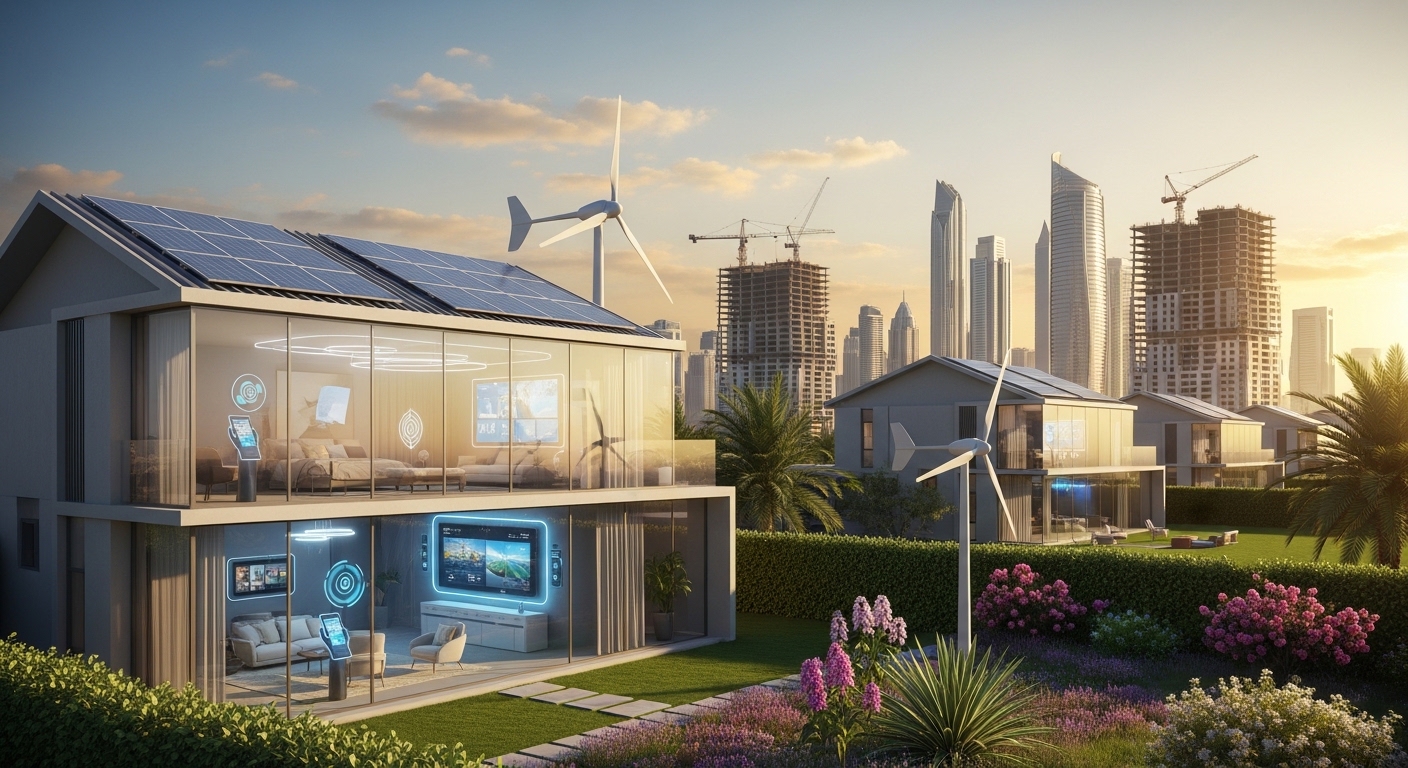

What buyers want in 2026: energy efficiency, AI integration, and wellness features.
For years, location was the defining factor in real estate. Buyers wanted to be close to business districts, schools, beaches, or transport links. While location remains important, I believe the conversation has fundamentally changed. In 2026, buyers in the UAE are asking a different question: How does this home improve my quality of life?
Today’s homebuyers are looking beyond luxury finishes and iconic architecture. They want homes that are intelligent, energy-efficient, and designed to enhance their physical and mental wellbeing. In many ways, the UAE is becoming one of the world’s leading laboratories for the future of residential living, combining sustainability, artificial intelligence (AI) and wellness into a new standard for modern homes.
This shift is happening at a time when the UAE’s property market continues to demonstrate remarkable strength. According to Knight Frank, Dubai recorded 205,400 residential transactions worth AED 544.2 billion in 2025, representing an 18% increase in transaction volume and a 25% increase in transaction value compared to the previous year. The continued growth suggests that buyers are becoming more selective—not simply purchasing homes, but investing in lifestyles that deliver long-term value.
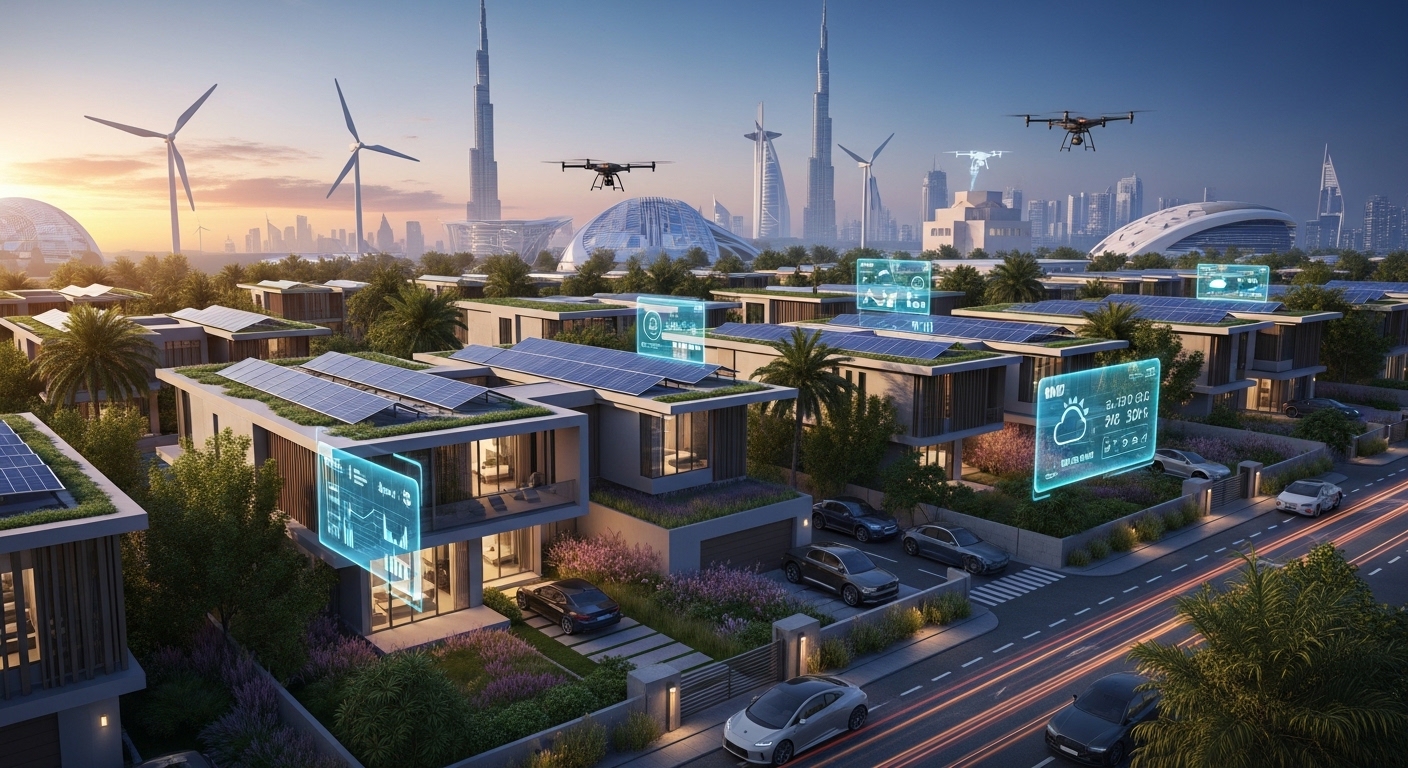
Sustainability Has Become a Value Driver
There was a time when sustainability was viewed as an optional feature or a marketing advantage. That era is over.
Today, energy efficiency has become a practical financial consideration. Buyers increasingly recognize that homes with better insulation, efficient cooling systems, smart energy management and renewable energy integration can significantly reduce operating costs while increasing long-term asset value.
This trend aligns closely with the UAE’s broader sustainability agenda. The Dubai Electricity and Water Authority (DEWA) continues to invest heavily in renewable energy, smart grids and digital infrastructure to support a cleaner and more efficient built environment. DEWA’s Smart Grid programme alone represents investments of approximately AED 7 billion through 2035, reinforcing Dubai’s ambition to become one of the world’s smartest and most sustainable cities.
Developments such as The Sustainable City have already demonstrated that environmentally conscious communities can be commercially successful while delivering lower utility consumption and healthier lifestyles for residents. Rather than treating sustainability as a niche concept, developers are increasingly integrating it into mainstream residential projects.
Artificial Intelligence is quietly becoming the new utility
Perhaps the biggest transformation taking place inside homes is the integration of artificial intelligence.
AI is no longer limited to voice assistants that switch lights on and off. It is becoming the invisible operating system that manages the entire home.
Modern smart homes are capable of learning occupancy patterns, automatically adjusting air conditioning, optimizing lighting, monitoring energy consumption, detecting water leaks before they become expensive repairs, and enhancing home security through intelligent surveillance systems.
This evolution mirrors what is happening at a national level. DEWA now describes itself as the world’s first AI-native utility, embedding AI across customer services, operations and infrastructure. One example illustrates the impact perfectly: AI has helped reduce customer security deposit refund times from four days to just eight minutes, while its virtual assistant has handled more than 13 million customer enquiries since launch.
If AI can transform an entire utility provider, it is easy to understand why homebuyers increasingly expect similar intelligence within their own properties.
Wellness is becoming the New Luxury
One of the most fascinating trends I am seeing is that buyers no longer define luxury solely by marble finishes or imported kitchens.
Luxury is increasingly measured by well-being. Natural lighting.
Superior indoor air quality. Noise reduction.
Access to green spaces. Walkability.
Fitness facilities. Cycling paths.
Smart air filtration. Biophilic design.
These features are moving from “nice-to-have” amenities to genuine purchasing priorities.
Developments across Dubai and Abu Dhabi are responding by integrating wellness into community planning rather than treating it as an afterthought. Projects focused on healthy living, longevity and integrated wellness reflect changing consumer expectations, particularly among younger professionals, families and international investors seeking homes that support healthier lifestyles.
The pandemic accelerated awareness of how much our homes affect our physical and mental well-being. That awareness has not disappeared—it has become embedded in purchasing behaviour.
Buyers Are Thinking About Long-Term Value
Another important shift is that buyers are becoming more analytical.
Instead of asking, “How much can this property appreciate next year?” many are asking:
- How much will this home cost to operate?
- Can technology reduce maintenance expenses?
- Will energy-efficient features protect future resale value?
- Will this community remain attractive over the next decade?
These are sophisticated investment questions.
Smart homes equipped with AI, efficient utilities and sustainable infrastructure are increasingly viewed as lower-risk assets because they align with global environmental trends and evolving consumer preferences.
As governments continue introducing greener building standards and investors become more ESG-conscious, homes designed around sustainability may command stronger long-term demand than conventional developments.
The Future Is Not About Smart Homes – It Is About Smarter Living
I believe the phrase “smart home” is becoming too narrow.
The future is really about smarter living.
Technology should not exist simply because it is impressive. It should solve problems, reduce costs, improve comfort, and help people live healthier lives.
Likewise, sustainability should not be viewed purely as an environmental responsibility. It should be understood as a long-term investment strategy that benefits homeowners, developers, investors, and cities alike.
The UAE is uniquely positioned to lead this transformation. Government initiatives supporting renewable energy, AI adoption and sustainable urban development are creating an ecosystem where innovation is becoming part of everyday residential life rather than an exception.
For buyers entering the market in 2026, the question is no longer whether a home is beautiful. The real question is whether it is intelligent enough to meet tomorrow’s expectations.
Because in the years ahead, the homes that create the greatest value will not simply be the largest or the most luxurious.
They will be the homes that think, adapt, and care for the people living inside them.
References
- Knight Frank. Dubai Residential Market Review – Q1 2026 (Knight Frank AE)
- Knight Frank. Dubai Residential Market Review – Q4 2025 (Knight Frank AE)
- Dubai Electricity and Water Authority (DEWA). Strategic collaboration on sustainability, AI and future-ready infrastructure (DEWA)
- Dubai Electricity and Water Authority (DEWA). DEWA: The world’s first AI-native utility (DEWA)
- Dubai Electricity and Water Authority (DEWA). My Sustainable Living Programme (DEWA)
- DEWA. World Future Energy Summit 2026 initiatives (DEWA)